Recent Posts
Showing posts with label Countryside tour. Show all posts

Wednesday, 6 August 2014

Turning Around


Thing to do in Siem Reap, Cambodia. Siem Reap is a small city just 20 percents people live in the city, if you go out around 10 or 15 kilometers you may see countryside that they have different live than city. The roads are small and bumping or muddy but it is a real life of rural Cambodian.
 
The house are height up from the ground, because of traditional style. Under the house they can put their properties because they have small house, living room and bedroom together just different mosquito net, those their private room.

The children  they always playing around their house and along the street. They swim in a small river along the road or a small moat around the houses. you also may see the children riding bike to school with their friends too. Normally in the morning by 7 am going school and come back in 11 am. And it will return again from 12:30 pm going to school come back around 5pm evening.

Villagers always go out during day time around 4 or 5 hours a day in planting rice season. They work at the rice field. they just stay in the afternoon around 12pm until 3pm they go out again to 5 : 30pm.
The rural Cambodian people they sleep very early around 7 pm or 8pm after TV finish movie. they get up around 5 am or earlier when they have some work to do.

In dry season normally they do not work at the rice field because no water. they replace by going in to city to work at worker built the houses , hotel , restaurant, tuk tuk driver, security guard..... just the children, lady and old people stay in the village.

I recommend you to do cycling or motor tour better than tuk tuk or car, because the road at the country side is not good with.

Monday, 14 July 2014

Cooker made by temple stone

 They are many temples in Siem Reap, Cambodia. and plenty of temples are broken. Some they rebuild and  some they do not care, even people living around, As rural Cambodia a few temples are hidden in the countryside in a small village called Prasat Char temple, Prasat Char temple, located northwest from Siem Reap city. It is a very old temple that no one know who build and when, because no body go to restore or study. It is hiding in small village, they are around 400 families living close. The temple broken a lot and the stones stay every where in the village, Some people they took the stone to be their cooker or something else. 


Join our tour if you want to see the Real Countryside in Siem Reap

Monday, 28 April 2014

Some kind of fruit in Angkor forest

Panheav fruit
Sorry! i don't know the name of this fruit in English, but in Cambodia we called Panheav. it is sour and sweet. it fruited in the middle tree and only one time a year. Normally it start in the late April to May for having fruiting. it is a popular fruit like mango as well.

This fruits i took at Angkor forest, after finish small party with workmates. and we rode the motorbike inside the forest and picked them up, it was not belong to anyone. There some kind fruit more beside this.

 Ro Peak fruit

 Kuy fruit


Say Morn fruit

Saturday, 5 April 2014

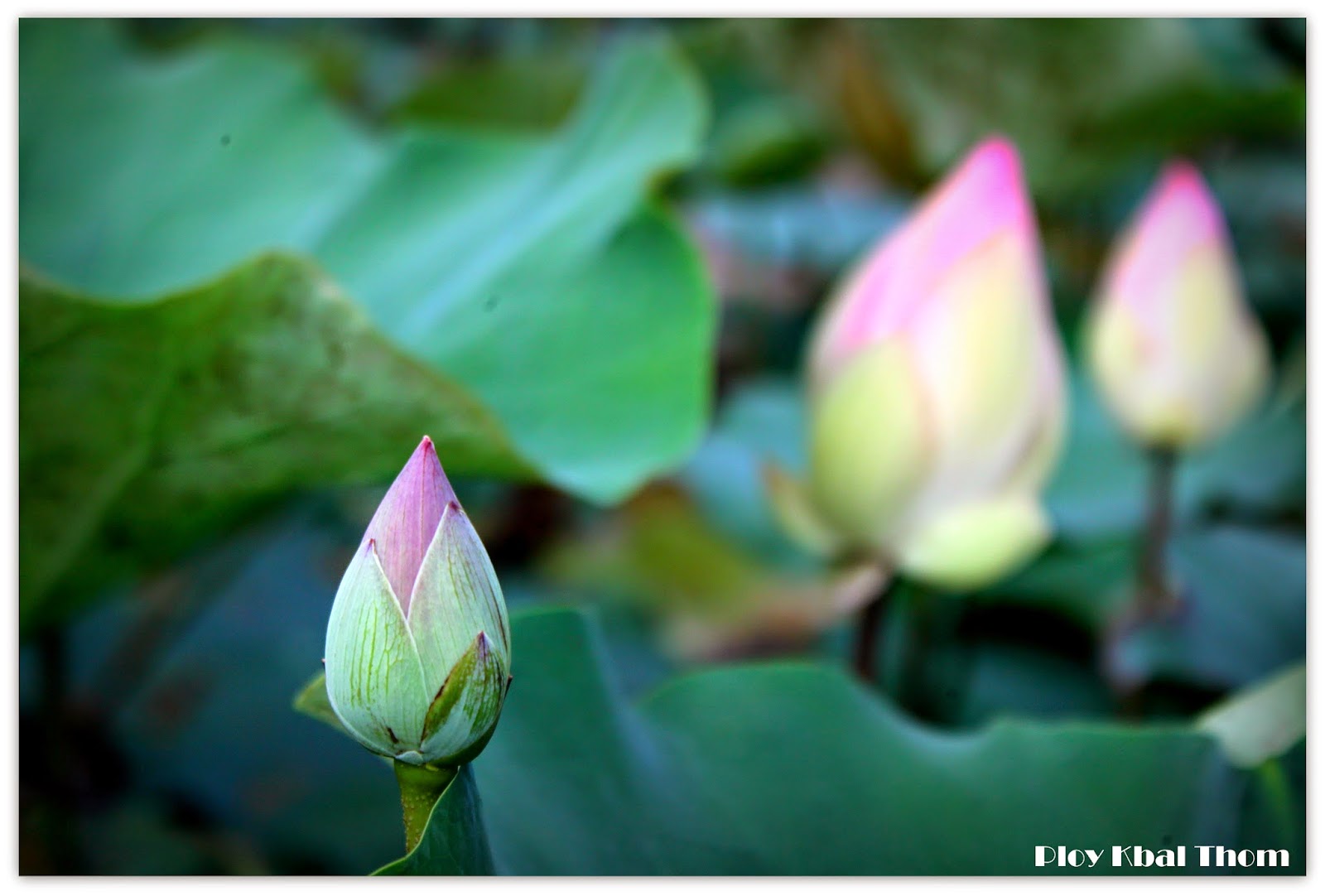
Lotus flower photos

There are some photos of lotus flowers that i took close to my house. there is a lotus farm. Normally the village her they growing rice in rainy season and when they finish they rice , they grow lotus flower to get fruit and flower for selling.


Wednesday, 26 February 2014

Real life experience style with Countryside Adventure


Real life experience style with Countryside Adventure, you will enjoy the most of your trip holiday after you getting bored from the temple visiting,,, full day cycling tour will bring you to the authentic rural life with a beauty of Cambodia countryside and experience thing with the locally of the village of an isolate villages that your ride pass and through to unlock the traditional rural cozy house and life living.... together the stunning scenery view of the rice paddy field along the way ... this is the only way to escape the crowds and to get more fun with your own ride of countryside at cycling to discover the hidden history, culture and traditional of local life at the countryside.


Tuesday, 25 February 2014

Germans cycling off road in Siem Reap.

Four German men and one German woman did the the Angkor off road tour of KKO, they are from Cologne. They have a long holiday in Asia Thailand , Cambodia and Vietnam. They did two tours of KKO bicycle tour, first day Angkor off road and second Countryside Adventure. They looked very sporty and very nice peoples. All of them i remember name only , he is Klaus , a man wear blue T-shirt stand at the right of lady. and other i did not remember, Klaus he was passed the quiz of Apsara with six toes at Preah Khan temple. 


Friday, 14 February 2014

A title girl wearing underwear goes to school


A local school at Angkor North village a cute title girl wearing underwear goes to school. Many of children that they parents did not care about their dress, they might wear whatever they want or some children did not wear anything and go to study at school. One school in the Angkor village around 50 students that they are 6 years old to 10. They study Khmer, Mathematics and draw between Monday to Saturday. They have a class only 3 hours a day 7:00am to 10:00am and no class in the afternoon. Almost the children do not wear school uniform, just a few of them did.

Their school look very old that it built by palm leaf and bamboo frame, many and big hold around the walls. but they have a strong table. And the teacher also lives in that village. it is very hard for because she has a lot of students, sometimes she fight a student who did not listen to her. However she is very strict but some children they do scare the teacher fight .


Saturday, 8 February 2014

Fishing around the temple lake

Around the temple normally there some small lake for the people living around fishing for they family after come from work in the city. There are not many big fishes , it just small fishes like  cat fishes or other kind of lake fishes. A man carrying a fishing net through into the water, jumping and take their into water the catching before the take the net up. 


Climate and weather

Cambodia is a tropical country–it’s located just a smidge above the equator–with a usual temperature range of 21 to 35 °C (69.8 to 95 °F). Hot and steamy would be a good way to describe the weather here, but lest you find this unappealing, imagine walking around at night in a T-shirt without ever having to worry about bringing along a sweater. (Although that T-shirt may be covered in mango juice, since Cambodia’s weather means cheap tropical fruit year round.) There’s no harsh winter, and in fact no winter to speak of at all. Bring a sweater anyway, though, since many buses, offices, and stores like to keep the air-conditioning on high.

Cambodia is always warm (some say hot), with two distinct seasons, dry and monsoon (that is, rainy). Within those seasons, there are also cool and hot periods. The standard view is that Cambodia has three seasons: cool season, hot season, and rainy season.

Cool season: December-February

The weather starts to cool down in November and is actually pleasant in December and January. These are the months to visit if you want to be reminded of what a tropical paradise Cambodia is–the beach weather in Sihanoukville and the islands is perfect during this time of year. The temperature in Phnom Penh ranges from 18 to 32 °C (70 to 90 °F). When the thermometer dips to the low end of that range, it’s not uncommon to see Khmer wearing parkas and complaining about how cold it is.
January is the coolest month of the year. February is still pleasant, but temperatures can start to rise by the end of the month. Because it has the best weather of the year, cool season is also when mobs of tourists descend on Cambodia. So for those who are sensitive to crowds, this is perhaps the least enjoyable time to travel around the country and especially to visit Angkor Wat, which is at its most mobbed during cool season. That said, cool season is also when Cambodia is at its most temperate, so for many it’s still the best time to visit the temples or do any sort of hiking or trekking

Hot season: March-June
April is usually the hottest month of the year, when temperatures start to climb to 40 °C (104 °F). It’s called dry season, but the humidity makes it feel hotter than whatever the weather report says. During April and May in Cambodia, the heat can accurately be described as oppressive. There’s a serious dearth of shade, the air is still, and the streets are dusty. In parts of the country, slash-and-burn farming results in hazy skies. If you’re considering living in Cambodia part-time, hot season is the season to avoid.
Many expats try to arrange to vacation abroad during hot season, so this is often when they make their yearly pilgrimage to their home countries. Expats who stay in Phnom Penh spend as much time as possible in or near the many pools the town has to offer, or drinking cocktails and complaining.
It rains occasionally during hot season, usually in short, powerful showers that are less than an hour long.

Rainy season (hot and cool): June-September, October-November

Most expats dread their first monsoon season in Cambodia, but by the time they’ve slogged through the months of hot season, the rains come as a welcome respite. One of the most important things to remember is that although it can rain upwards of 20 days out of every month in rainy season, the showers are generally short (less than an hour) and predictable, usually happening in the afternoons.
Umbrellas are generally useless during monsoon season, as the rains are often accompanied by powerful winds. The most effective protection against rain is one of the 2,000-riel ($0.50) colorful plastic ponchos that can be found for sale all over the country. Plastic flip-flops, the footwear of choice for both expats and Cambodians, are also the most sensible rainwear. That’s true even in the cities; both Phnom Penh and Siem Reap have experienced flooding during the last few rainy seasons, on a small and large scale respectively.
The upside of rainy season is that the rains every afternoon usually bring some relief from the high temperatures in July through September. In October and November it is still raining, but the temperatures start creeping down, with average highs of around 30 °C (86 °F) and lows around 23 °C (73 °F).
Rainy season is a great time to travel around Cambodia, as the country is mercifully empty of tourists.


Almost the hold life


This is a old strong man 81 years old. He spent nearly hold life being farmer. Not only him in the village they are some of old people still work hard at the rice field. 

Outside the city


Most of people living  outside the city, they are farmers. They live by growing rice, veg or animals feeding. Beside these work they also go out of the homeland to work in the city or neighboring country such as , Vietnam or Thailand . In the village there are only ladies , children and old people. The man and adults they leave home. Around 4 or 5 months that they stay in the village, because they come for help growing rice in rainy season. But some people they do leave the home, they stay and work there , however they get a tittle money, those people everyday they also leave their house to the rive or the lake to fishing or to keep the cows or buffaloes, Anyway they think they money not so important than they family living together.

If you want to see these life, Join with us by : Countryside Adventure.

Tuesday, 4 February 2014

Angkor Wat


Built between roughly A.D. 1113 and 1150, by the King Suryavarman II but he did not finish and other king Jayavarman VII continued.

The encompassing an area of about 500 acres (200 hectares), Angkor Wat is one of the largest religious monuments ever constructed. Its name means “Temple City.”
Originally built as a Hindu temple dedicated to the god Vishnu, it was converted into a Buddhist temple in the 14th century, and statues of Buddha were added to its already rich artwork.
Its 213-foot-tall (65 meters) central tower is surrounded by four smaller towers and a series of enclosure walls, a layout that recreates the image of Mount Meru, a legendary place in Hindu mythology that is said to lie beyond the Himalayas and be the home of the gods.
The city where the temple was built, Angkor, is located in modern-day Cambodia and was once the capital of the Khmer Empire. This urban center contains hundreds of temples and a population that has been estimated to be as high as 1 million people. It was easily the largest city in the world until the industrial revolution.

The temple is surrounded by a 650-foot-wide (200 meters) moat that encompasses a perimeter of more than 3 miles (5 km). This moat is 13 feet deep (4 meters) and would have helped stabilize the temple’s foundation, preventing groundwater from rising too high or falling too low.

Angkor Wat’s main entrance was to the west (a direction associated with Vishnu) across a stone causeway, with guardian lions marking the way. To the east of the temple was a second, more modest, entrance. 


The heart of the temple was the central tower, entered by way of a steep staircase, a statue of Vishnu at top. This tower “was at once the symbolic center of the nation and the actual center where secular and sacred power joined forces,” writes researcher Eleanor Mannikka in the book "Angkor: Celestial Temples of the Khmer Empire" (Abbeville Press, 2002). “From that unparalleled space, Vishnu and the king ruled over the Khmer people.”

Cambodia brief history


  • Cougar

    Countryside

  • Lions

    The wonder of temple

  • Snowalker

    Small Business

  • Howling

    People's Life

  • Sunbathing

    Outside Siem Reap


Cambodia's modern-day culture has its roots in the 1st to 6th centuries in a state referred to as Funan, know as the oldest Indianised state in Southeast Asia. It is from this period that evolved Cambodia's language, part of the Mon-khmer family, which contains elements of Sanskrit, its ancient religion of Hinduism and Buddhism. Historians have noted, for example, that Cambodians can be distinguished from their neighbours by their clothing - checkered scarves known as karmas are worn instead of straw hats.
Funan gave way to the Angkor Empire with the rise to power of King Jayavarman II in 802. The following 600 years saw powerful Khmer kings dominate much of present-day Southeast Asia, from the borders of Myanmar east to the South China Sea and north to Laos
It was during this period that the Khmer kings built the most extensive concentration of religious temples in the world - the Angkor temple complex. This complex covers an area of 400 square kilometers in the province of Siem Reap. The area contains more that 100 temples and more than 1080 temples across the country. The most successful of the Angkor's kings, Jayavarman II and Jayavarman I, Suryavarman II and Jayavarman VII, also devised a masterpiece of ancient engineering: a sophisticated irrigation system that includes barays (gigantic man-made lakes) and canals that ensured as many as three rice crops a year. Part of this system is still in use today.
As the Angkor period ended, Cambodia's capital moved south to Longvek, then to Oudong, and finally to the present-day capital pf Phnom Penh. Among the main features of the post-Angkorean era, besides the movement of the capital, was a widespread conversion to Theravada Buddhism, illustrated on temple carvings, where Buddhist features gradually replaced Hindu features. 
The 15th to 17th centuries represented a time of foreign influence, when expansionist Siam and Vietnam fought over Cambodia.
By the mid-1800s, Cambodia, like most other countries in Asia, came under increasing pressure from European colonial powers. In 1863, King Norodom signed a Protectorate Treaty with France.
In 1945, the Japanese briefly ousted the Frence. Encouraged, King Sihanouk campaigned tirelessly and in 1953 he succeeded in winning independence for Cambodia, effectively ending 90 years under French protectorate. King Sihanouk abdicated the throne to his father and took the reins of government himself as head of state.
Throughout the 1950s and 60s Cambodia was self-sufficient and prospered in many areas. However, the quagmire of growing war in Vietnam spread relentlessly, and in 1970, as war spilled over into Cambodia, Prince Sihanouk was overthrown by General Lon Nol.
On 17 April 1975, Lon Nol's weak-ended government was itself overthrown by the Khmer Rouge. They immediately emptied the capital of its residents and brought Prince Sihanouk back, only to hold him under house arrest. The ensuing four years "Reign of terror" under Pol Pot's democratic Kampuchea resulted in the deaths of an estimated 1.7 milliion people.
In 1979, the Khmer Rouge was overthrown and the Vietnamese-backed People's Republic of Kampuchea was established. In 1989 the Vietnamese withdrew the last of their troops and the government renamed the country State of Cambodia. The SOC ruled independently until the Paris Peace Agreement of 1991 created the United Nations Transitional Authority (UNTAC). Supported by the presence of some 22000 UN troops, UNTAC in May 1993 supervised general eletions in Cambodia. A second general election was held in 1998.

Cambodia today enjoys a parliamentary system with one prime minister, Hun Sen. A constitution was adopted in 1993, the same year King Norodom Sihanouk returned to the throne. His Majesty remains a symbol of national unity to his people.


Getting around the temples


There are a few tips to help make your trip to the temples enjoyable: 

Transport: A tuk-tuk will cost around $12 - $15 a day to cover all of the main temples, and your driver can also act as tour guide. This is a good option for a group of 3-4 people. A taxi will cost a little more ($20 - 25 a day) but you might appreciate the air-con especially in the hotter months when the daytime temperature can reach 40C. If you're alone, consider hiring a motor and driver though you will less protection from the elements. If you're feeling energetic, hire a bicycle from just $1 a day, drink plenty of water and take frequent breaks. 

Timing: Sunrise and sunset are the most popular times to view Angkor Wat. so it can get very crowded late morning and early afternoon tend to be the quietest times though it can be very hot so keep hydrated and avoid the sun where possible. Be flexible and allow extra time to deviate from your intended route if you want to avoid the crowds ( Join Bicycle Tour). During the month of may it can rain but usually does so only in the afternoons - take an umbrella or raincoat. 

Dress: Please remember t temples are places of worship so you should dress accordingly - singlets and skimpy shorts are definitely not appropriate and will not be appreciated by local people make sure your shoulders and knees and covered at the times, and take a hat or a parasol to shade you from the leat of the sun.  


Tuesday, 28 January 2014

Countryside Adventure Tour

Experience the real Cambodian countryside as we take you on a cycling adventure just outside Siem Reap - but show you a completely different world!

Cycle through typical Cambodian villages, rice fields. Visit Prasat Prie Temple, Banteay Thom.
Your biking adventure includes the use of high quality mountain bikes and the assistance of Engligh Khmer speaking guides
We will cover around 25kms between 8:00 am and 3:30 pm with plenty of rest stops
We have a lunch break in the village.
Angkor pass is not required 
Tours available 7 days a week
Please tell us where you stay, we take the bicycle to your hotel or guesthouse.
The payment is $25 per person, recommended  payment is $30 per person.
If you interesting, Please contact us by 
Tel   : (+855)70242829
Come and join us on an unforgettable mountain
bike experience!
Please Contact us below!

Booking Now!

Monday, 7 October 2013

Outside Siem Reap town